Every few weeks someone tells me AI is going to take all our jobs. Developers, designers, admin staff, the lot. Usually it's said with the same nervous energy people had about the internet in the late nineties.
I don't buy it, and I'm about as pro-AI as you can get. I want better models, sooner. But the fear misreads where the money and the work actually go.
The position: AI companies will keep making money, and people will keep paying them. What doesn't disappear is the gap between a powerful product and the person who needs it. A doctor won't wire up an AI stack between patients. A plumber won't either. Someone has to turn the tool into a service that fits a real business on a real Tuesday. That someone has work for a long time. Be that someone.
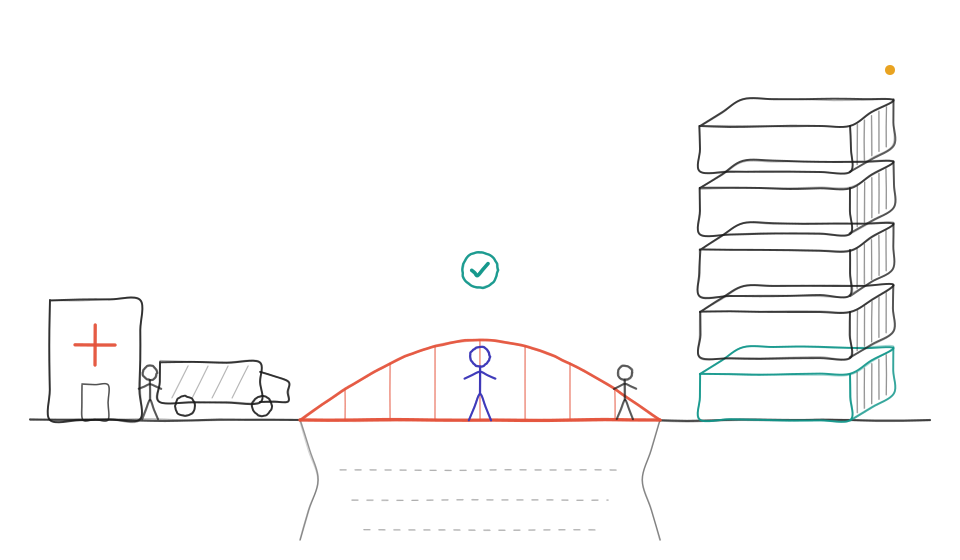
We've heard this before
Australians have watched this story play out with two of our own companies.
When realestate.com.au launched in 1995, the obvious prediction was that sellers would list their own homes and agents would fade away. The listings did move online. The agents didn't go anywhere. Jobs and Skills Australia counts roughly 104,000 people working as real estate sales agents today, and the number is still growing. The portal took over the noticeboard. It didn't take over pricing, negotiating, running inspections or holding a nervous vendor's hand through an auction.
Same with hiring. SEEK was founded in 1997, LinkedIn came a few years later, and recruiters were supposed to be finished. Instead, job boards made applying nearly free, so a single role started pulling in a pile of resumes nobody had time to read. A hiring manager with a team to run can't spend a week sifting applications. Recruitment is still a whole profession: around 33,000 recruitment consultants at the last Census. The platform made the middle more necessary, not less.
There's a classic version of this from outside Australia too. James Bessen showed that ATMs didn't wipe out US bank tellers. Each branch needed fewer of them, branches got cheaper to run, banks opened more, and the teller's job shifted from counting cash to looking after customers.
The pattern: when a technology makes something cheap, demand for it grows, and the human work moves to wherever the product stops.
Why the gap doesn't close by itself
AI products are general by design. They have to be, to sell to hundreds of millions of people. Every business that might use them is specific. The distance between those two things is where the work lives, and it's made of very ordinary stuff:
- Time. A GP's day is booked in fifteen-minute blocks. Learning prompt patterns, testing tools and reading API docs is a second job they didn't apply for.
- Context. The model doesn't know that this plumber never quotes hot water jobs over the phone, or that this clinic's referral letters go to three specific specialists.
- Integration. The value is never in the chat window. It's in connecting the model to the calendar, the job management system, the accounting software and the inbox the business already lives in.
- Accountability. When something goes wrong, the owner wants a person to call. "The model did it" isn't an answer a customer accepts.
- Trust. Most small business owners will try something new because someone they know set it up and stands behind it, not because a landing page told them to.
None of that is solved by a smarter model. A smarter model makes the opportunity bigger.
What the bridge actually looks like
Here's the kind of work I mean. None of it is exotic, and that's the point.
- The phone and the inbox. Missed calls are lost jobs for a tradie. An AI receptionist that answers, works out what's needed, books a slot in the real calendar and texts a summary to the owner's phone is worth far more than the model behind it.
- Admin for clinics. Drafting referral letters and recall reminders from notes, for a human to check before anything is sent. Health information is sensitive, so this one is as much about privacy and process as it is about prompts.
- Paperwork plumbing. Supplier invoices read and coded into the accounting system, quotes drafted from a site visit's voice note, timesheets checked against rosters.
- Knowledge on tap. The procedures manual nobody reads, turned into something a new staff member can ask questions of.
- Marketing that actually ships. Social posts, Google Business updates and review replies, drafted every week in the owner's voice and approved with one tap.
- The small custom app. A Django app with a model API behind it, doing one job that no off-the-shelf product does for this particular business.
How to price and position it
A few things that, in my experience, separate a real service from a side project:
- Sell the outcome, not the AI. "Every call answered and booked" is something an owner can value. "A GPT-powered voice agent" isn't. Many of them don't care which model it is, and they shouldn't have to.
- Pick a lane. Dental clinics, or electricians, or real estate offices. The second clinic is much easier than the first, because you already know the software, the vocabulary and the objections.
- Setup plus a monthly fee. A one-off fee to map the workflow and build the integration, then a monthly fee to run, monitor and improve it. The monthly part is honest: models change, APIs change and the business changes.
- Stay model-agnostic. Keep the model behind your own small interface, like
llm_extractabove. When a better or cheaper model ships, your clients get the upgrade and you keep the relationship. - Own the boring parts. Monitoring, logs, an off switch, a human fallback and a clear answer to "what happens to my data?" These are what make an owner trust you with their phones.
Where this breaks down
I'd be lying if I said every middleman survives. They don't.
- When the product closes the gap itself, thin middlemen get squeezed. If your whole service is something the platform turns into a checkbox next quarter, you're renting time. Even the bank teller story has a second chapter: the US Bureau of Labor Statistics now projects teller jobs to fall 13% from 2024 to 2034, as banking moves onto phones.
- Middlemen who only pass information along are the most exposed. The ones who last carry judgement, relationships and accountability. Real estate agents survived because they negotiate and take responsibility, not because they hold the listings.
- You become the support line. When it breaks at 7 am, they call you. Price that in, or don't take the work.
- Regulated data needs real care. Health, legal and financial information comes with obligations. If you can't explain where the data goes and who can see it, you're not ready to sell to clinics.
- The skill moves. Today the gap is wiring up APIs. Tomorrow it may be supervising agents, or redesigning a whole workflow around them. The bridge-builder has to keep learning faster than the gap moves.
Why I want AI to move faster
None of this is an argument for slowing anything down. The opposite.
Every jump in capability makes something possible that wasn't last year, and every one of those things needs someone to bring it to a clinic, a trade business or a corner shop. Better models don't shrink the bridge-building market. They keep adding new places to build bridges.
Most people won't follow model releases or read API docs. They'll keep doing their actual jobs, and they'll pay someone they trust to bring the new capability to them.
Bottom line
The fear is "AI will replace us". The more useful question is where the gap between the product and the customer sits, and who's standing in it. Don't just use AI. Bridge it. Pick a kind of business, learn its day, connect the tools to the systems it already runs on, and stand behind the result. AI companies will keep getting paid. So will the people who make what they sell actually work for a busy plumber.